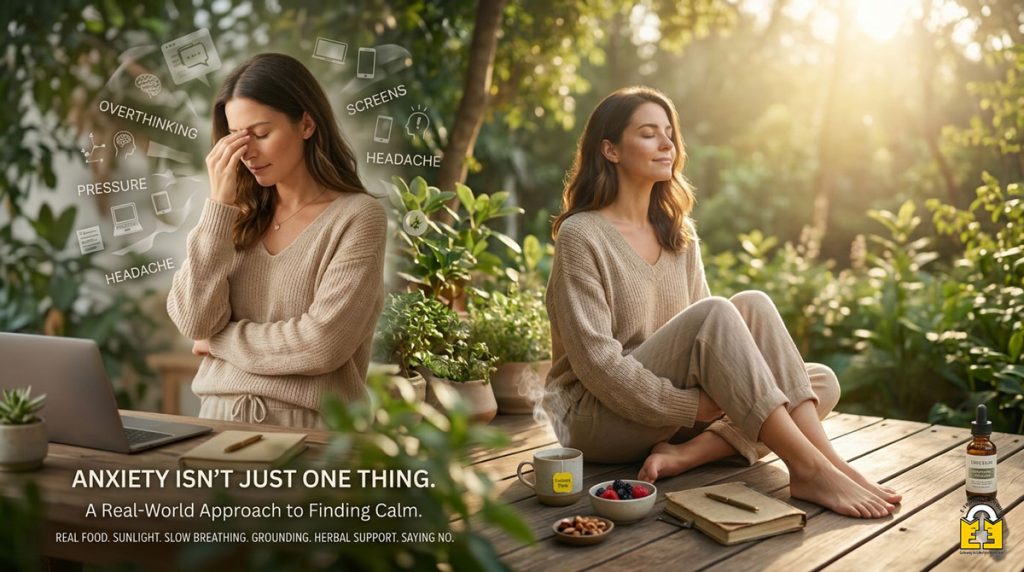
Alright, let’s talk about anxiety like real people do — not stiff, clinical, or overcomplicated.
Anxiety isn’t just one thing. For some people it’s that constant background hum. For others it hits like a wave out of nowhere — racing heart, shaky hands, overthinking everything. It can look like shyness, irritability, trouble sleeping, or full-on panic. Sometimes it even shows up alongside things like headaches or migraines.
And here’s the thing most people don’t say enough: anxiety usually isn’t random. It’s your body trying to get your attention. Something’s off — maybe physically, emotionally, or just from being overloaded for too long.
So what’s actually going on?
In simple terms, your system is stuck in “on.”
That could be coming from a few places:
- Low nutrients — especially magnesium, B vitamins, iron
- Blood sugar swings — skipping meals, too much sugar or caffeine
- Gut issues — your gut plays a big role in mood
- Hormones — especially when they’re out of balance
- Stress or past experiences — your body remembers even if your mind moves on
- Too much stimulation — constant noise, screens, pressure
Sometimes it’s one thing. Sometimes it’s a pile of small things.
What actually helps (in real life)
Not perfectly. Not instantly. But consistently.
A few basics that come up again and again:
- Eating real food regularly (protein helps a lot)
- Drinking enough water
- Getting sunlight early in the day
- Moving your body (even just walking)
- Cutting back on caffeine and sugar
- Sleeping properly (or at least trying to)
Then there’s calming the nervous system:
- Slow breathing (long exhales especially)
- Sitting in quiet for even a minute or two
- Grounding — like barefoot on grass, or just focusing on your senses
- Cold exposure — even splashing your face with cold water
- Things like humming, chanting, or gentle movement
And honestly — learning to say no. A lot of anxious people are constantly overextending themselves.
Anecdotes
This is where it gets real. These are patterns from people trying things, mixing approaches, and figuring out what works for them.
I’ve grouped similar experiences together so it’s easier to follow.
Gentle daily calmers (herbs, teas, nutrients)
A lot of people lean on simple, repeatable support:
- Lemon balm tea once or twice daily, sometimes paired with chamomile or lavender at night
- Magnesium (especially glycinate) in the evening, sometimes around 200–400 mg
- L-theanine during the day around 100–200 mg for a calmer focus
- Ashwagandha daily (commonly 300–600 mg), often combined with lemon balm
People say this combo takes the edge off — less shakiness, more steady mood, better sleep.
Stronger herbal approaches
Some go a bit deeper with herbs:
- Valerian root, passionflower, skullcap, or blue vervain — usually at night due to drowsiness
- Kava tea occasionally for physical tension
- Saffron (around 15–30 mg daily) for mood support
- Holy basil or motherwort in small doses for calming effects
A common theme: these work best when rotated or used intentionally, not all at once.
Minerals, vitamins, and gut support
Another big group noticed anxiety improving when they addressed deficiencies:
- Magnesium glycinate or threonate (200–400 mg daily)
- B-complex vitamins or specific B1 (thiamine)
- Vitamin D (often 1000–4000 IU depending on needs)
- Omega-3s for brain support
- Probiotics or fermented foods for gut health
Some people said once their levels were balanced, their anxiety dropped significantly.
Body-based grounding tricks (in-the-moment relief)
These are the “I need relief right now” tools:
- Holding ice or splashing cold water on face (10–30 seconds)
- Slow breathing — even just 8 deep breaths
- Putting a hand on the chest and focusing on breathing
- Lying in a child’s pose position, sometimes with weight or pressure
- Using scent (lavender, eucalyptus, peppermint)
People describe these as surprisingly effective for stopping a spiral mid-way.
Lifestyle shifts that made a big difference
These came up again and again:
- Cutting caffeine completely
- Reducing sugar and processed foods
- Going gluten or dairy light (for some people)
- Walking daily, being outside, sunlight exposure
- Journaling to track triggers
- Setting boundaries and saying no more often
One pattern stood out: a lot of people didn’t get better until they changed their daily habits, not just added supplements.
Nervous system + emotional work
This is the deeper layer:
- Meditation (even 1–5 minutes to start)
- Breathwork practices
- Tapping or somatic release (shaking, movement)
- Prayer, reflection, or quiet time
- Trauma-focused approaches like therapy or EMDR
People often said this is where the real shift happened — when they stopped just managing symptoms and started processing what was underneath.
Nature and sensory resets
Simple but powerful:
- Walking barefoot outside
- Sitting in a quiet natural space regularly
- Gardening, being around animals, or water
- Listening to calming music or soundscapes
Some described this as their “reset button.”
More mixed approaches
Some people explored additional options:
- CBD or similar calming compounds in small doses
- Functional mushrooms like lion’s mane or reishi
- Cold exposure like cold plunges
- Hormone-balancing support when needed
Results varied a lot here — what worked amazingly for one person did nothing for another.
A pattern worth noticing
No one thing fixes anxiety for everyone.
Most people who improved did some version of this:
- Supported their body (nutrients, sleep, food)
- Calmed their nervous system (breath, grounding)
- Changed their lifestyle (less stimulation, more boundaries)
- Addressed deeper causes (stress, trauma, hormones, gut)
It’s less about finding one magic fix… and more about building your own combination.
Final thought
If anxiety feels loud, it doesn’t mean something is wrong with you.
It usually means something needs attention.
Start small. Pick one or two things that feel doable. Try them consistently. Then adjust.
You don’t have to fix everything at once — just begin.
Disclaimer
This information is for general education and shared experiences only and is not intended as medical advice, diagnosis, or treatment. Always consult a qualified healthcare professional before starting any new supplement, herb, or health approach, especially if you are taking medication, have existing health conditions, or are pregnant or breastfeeding.
Individual responses can vary, and what works for one person may not work for another. If anxiety is severe, persistent, or worsening, seek professional medical or mental health support.