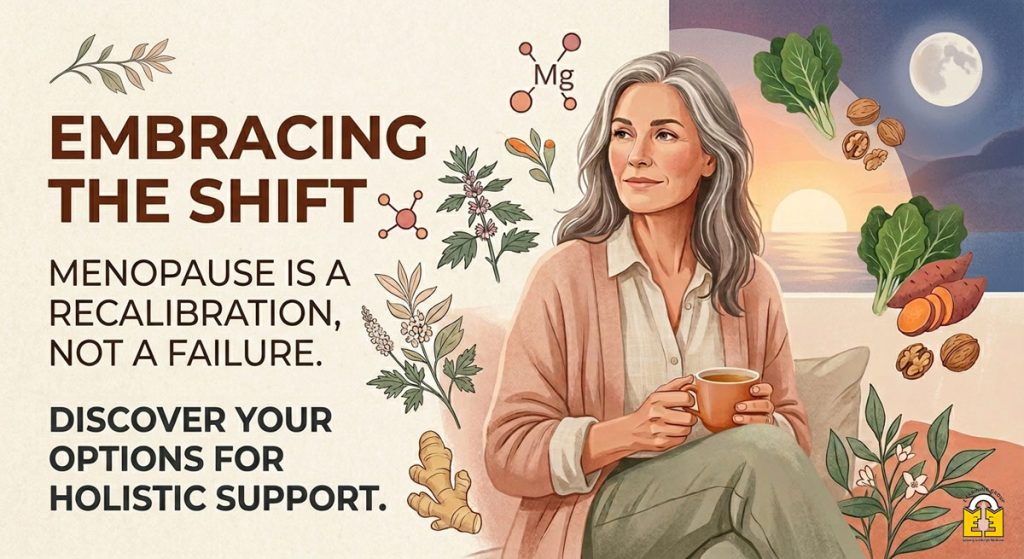
Menopause isn’t the end of anything—it’s a shift. A recalibration. And while it can feel overwhelming at times, your body is not failing you. It’s simply changing how it works, asking for different kinds of support than it did before.
Let’s talk about it in a real, grounded way—no overwhelm, no rigid rules. Just options you can explore and take what feels right for you.
Understanding What’s Really Going On
As you move through menopause, your hormones don’t disappear—they reorganise.
Estrogen and progesterone levels drop, and your body begins to rely more on your adrenal glands, liver, and even fat stores to help regulate things. This is why stress, sleep, blood sugar, and nutrition suddenly matter so much more.
You might notice things like hot flashes, mood swings, brain fog, weight changes, or disrupted sleep. These aren’t random—they’re signals. Often, they reflect how your nervous system, metabolism, and hormone balance are adapting.
Supporting Hormones Gently and Naturally
There’s no single “fix,” but many women find relief by layering small, supportive habits and natural remedies.
Herbs like peony root, dong quai, and chasteberry have long been used to support hormone balance and ease menstrual or menopausal discomfort. Maca root is often turned to for energy, mood, and overall hormonal stability, while ashwagandha helps calm the stress response and reduce cortisol.
Black cohosh is one of the more commonly used herbs for hot flashes and night sweats, though it’s generally best used short-term rather than continuously for long periods. Ginger can soothe inflammation and digestion, and damiana may help take the edge off emotional ups and downs.
Simple nutrients can make a big difference too. Vitamin B6 and B12 support mood and energy, while vitamin C, especially in buffered forms, helps the adrenal glands cope with stress.
Some women also explore oils like evening primrose or borage for skin, joints, and mood, especially when dryness or inflammation becomes noticeable.
The Heart, Stress, and Emotional Load
One herb that often stands out in this phase is motherwort. It’s known for supporting both the heart and the nervous system—helping with things like palpitations, anxiety, irritability, and even hot flashes.
It’s traditionally used more as a tincture than a tea due to its strong bitter taste. Many people turn to it during times of emotional stress or when they feel that tightness in the chest that comes with overwhelm or heartache.
Pairing calming herbs like this with good sleep, rest, and even simple breathing practices can go a long way in settling the nervous system, which in turn helps stabilise hormones.
Brain Fog, Mood, and Mental Clarity
If you’ve ever walked into a room and forgotten why, or struggled to find words, you’re not imagining it.
Hormonal changes can affect brain chemistry, including memory, focus, and mood. Supporting your brain becomes just as important as supporting your hormones.
Many women find benefit in nutrients that nourish the brain—omega-3 fatty acids, B vitamins, and compounds that support neurotransmitters. Mushrooms like lion’s mane are often used for cognitive support, while adaptogens can help with mental stamina.
But don’t underestimate the basics—movement, sunlight, and even a short daily walk can noticeably lift the fog.
Hot Flashes, Sleep, and Blood Sugar
Hot flashes and night sweats are some of the most frustrating symptoms, and they’re often tied to more than just hormones.
Blood sugar swings, stress hormones, and even hydration levels all play a role.
Magnesium is a standout here—it helps relax the body, supports sleep, and can calm the nervous system. Some women prefer taking it at night to help with sleep quality.
Herbal teas like hibiscus or nettle can support circulation and hydration, while foods like beetroot or pomegranate may help with blood flow.
Sleep itself often becomes lighter or more disrupted. This can be linked to lower progesterone and higher nighttime cortisol. A small protein-rich snack before bed, calming rituals, or nutrients like glycine or L-theanine can sometimes help more gently than stronger sleep aids.
Food, Liver Support, and Metabolism
What you eat now has a more direct impact than it used to.
Focusing on whole foods—good protein, healthy fats, and plenty of vegetables—can stabilise blood sugar and support hormone balance. Cruciferous vegetables like broccoli and kale help your body process excess hormones, while foods like sweet potato can support more stable energy.
Your liver also plays a bigger role now, helping clear and regulate hormones. Bitter foods, lemon water, and things like castor oil packs are often used to support this process.
Reducing highly processed foods and certain oils may also help reduce inflammation and support overall balance.
Bones, Body, and Strength
With hormonal changes, bone density and muscle mass can decline more easily. This is where minerals like magnesium, along with vitamin D and K2, become important.
Weight-bearing movement—even something as simple as walking or light strength training—can make a real difference over time.
Hydration, collagen-rich foods, and mineral support all contribute to keeping your body strong and resilient.
Real Experiences from Women
Many women experiment and find their own combinations that work for them.
Some have shared that black cohosh made a noticeable difference in reducing hot flashes and improving mood. Others found evening primrose oil helpful for skin, dryness, and overall symptom relief.
Maca root comes up often as a go-to for energy and hormonal balance, while blends that include herbs like red clover, valerian, or lemon balm are used for calming and sleep.
Magnesium, especially in glycinate form, is commonly mentioned for better sleep and relaxation, sometimes paired with baths or evening routines to help the body unwind.
There are also stories of women using progesterone creams or other forms of hormone support under guidance and feeling like themselves again—sleeping better, thinking more clearly, and regaining a sense of balance.
Others take a more lifestyle-focused approach—regular movement, time in the sun, simple routines, and nourishing food—and notice steady improvements.
And sometimes, it’s small, unexpected things that feel like a turning point, like adding a specific tea, changing sleep habits, or finally addressing stress in a meaningful way.
Finding What Works for You
There’s no one-size-fits-all approach to menopause.
Some people prefer natural herbs and nutrients. Others explore hormone therapies. Many find a combination works best.
The key is to listen to your body and stay curious. Try one or two things at a time. Notice how you feel. Adjust as needed.
You’re not trying to fix yourself—you’re learning how to support your body in a new phase of life.
Disclaimer
This article is for educational purposes only and is not medical advice. Always consult with a qualified healthcare professional before starting any new supplements, herbs, or treatments, especially if you have underlying health conditions or are taking medications. What works for one person may not be suitable for another, and individual needs can vary.