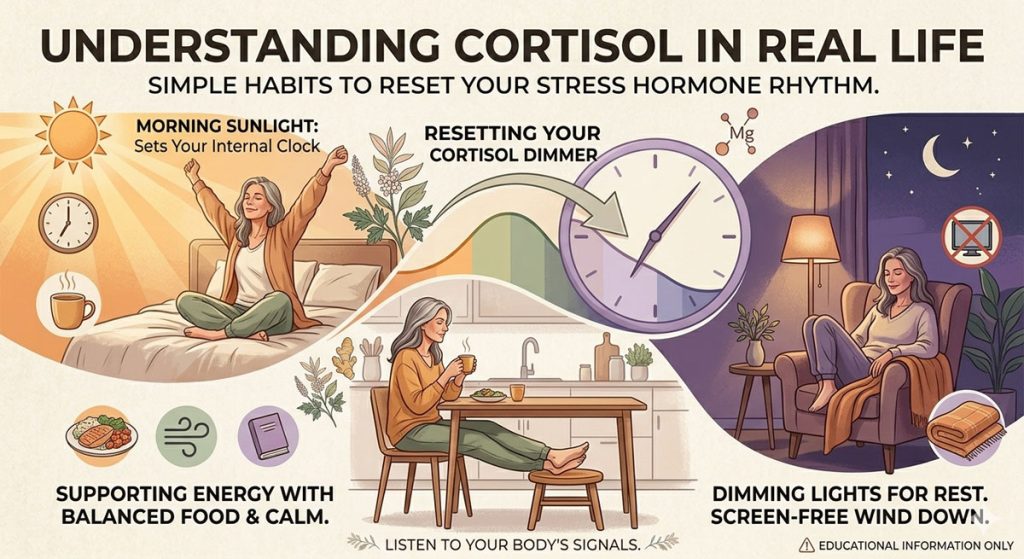
Cortisol often gets called the “stress hormone,” but that label only tells part of the story. In everyday terms, cortisol is your body’s built-in alarm system. It helps you wake up in the morning, respond to challenges, regulate energy, and even manage inflammation. The problem isn’t cortisol itself. The problem is when it stays too high for too long, or drops too low and leaves you feeling flat, tired, and unable to cope.
Think of cortisol like a dimmer switch, not an on-off button. It should rise in the morning to get you going, gently fall through the day, and be low at night so you can rest. When that rhythm gets thrown off, everything from sleep to mood to weight can start to feel out of sync.
A lot of people notice the signs before they understand the cause. Feeling wired but exhausted. Gaining weight even when habits haven’t changed. Trouble sleeping, especially waking in the night. Anxiety that doesn’t quite make sense. The tricky part is that high and low cortisol can sometimes feel similar, which is why guessing can lead you in circles.
What helps most people isn’t one magic fix, but bringing the body back into a steady rhythm.
One of the biggest levers is your daily light exposure. Getting natural light early in the morning, especially around sunrise, helps set your internal clock. That simple habit tells your body when to release cortisol and when to wind it down. On the flip side, too much artificial light at night, especially from screens, confuses that rhythm. Dimming lights in the evening, limiting screens before bed, and sleeping in a truly dark room can make a noticeable difference over time.
Food timing and balance matter more than many expect. Going too long without eating, under-eating, or avoiding carbohydrates completely can push your body to rely on stress hormones for energy. Regular meals with enough protein, carbohydrates, and healthy fats give your body a steady fuel source so it doesn’t have to keep hitting the stress button.
Nutrients also play a quiet but important role. Many people with cortisol issues are low in key vitamins and minerals, especially certain B vitamins, magnesium, and others involved in energy and nervous system function. Supporting these levels can help the body feel safer and more stable.
Then there’s the nervous system side of things. Stress isn’t just about workload or big life events. It can come from poor sleep, gut issues, inflammation, over-exercising, emotional strain, or even constantly being “on.” Practices that calm the nervous system, like slow breathing, time in nature, gentle movement, or simply allowing moments of stillness, can lower the overall stress load your body is carrying.
Hormones like estrogen, progesterone, and thyroid function are also closely tied to cortisol. When one is out of balance, the others often follow. That’s why a bigger picture view tends to work better than focusing on cortisol alone.
There’s also growing awareness that blood sugar and insulin sensitivity play a role. When blood sugar swings up and down, cortisol often rises to compensate. Stabilizing that system can, for some people, make a major difference in how they feel day to day.
Herbs and plant-based supports are often used as well. Things like calming teas, adaptogenic herbs, and nutrients that support relaxation can be helpful for some people. But they tend to work best when layered on top of good daily rhythms rather than used as a shortcut around them.
At its core, improving cortisol balance is less about forcing the body to change and more about creating conditions where it can settle back into its natural rhythm.
Anecdotes
People’s experiences with cortisol are often deeply personal, and sometimes surprising.
One person described how simply aligning their day with natural light changed everything. Morning sunlight, dim evenings, and less screen time led to better sleep within weeks, and that alone helped their stress levels settle.
Another found that supporting nutrient levels, especially B vitamins, made them feel calmer and more resilient. They noticed that taking smaller amounts worked better for their body than full doses, which sometimes caused discomfort.
Someone else shared how hormone balance played a key role for them. Once they addressed underlying imbalances, their cortisol symptoms, including pain and anxiety, began to ease.
There are also stories of people who discovered their cortisol was actually low, not high. They felt overwhelmed, sensitive to noise and stimulation, and exhausted. Proper testing helped them understand what was really going on and guided more appropriate support.
For others, lifestyle shifts were the turning point. Eating regularly instead of skipping meals, improving sleep, and reducing intense exercise helped bring their body out of a constant stress state.
Some people noticed that working on emotional health had the biggest impact. Therapy, journaling, and learning to slow down helped them step out of constant overdrive. They realized their body had been responding not just to physical stress, but to years of mental and emotional pressure.
There are also quieter, everyday practices that people swear by. Sitting outside with a warm drink, walking in the morning light, gentle stretching, putting your feet up against a wall and breathing deeply, writing letters, reading, or learning something creative like music. These aren’t dramatic interventions, but they send a powerful signal of safety to the body.
Others focused on reducing hidden stressors. Cleaning up their environment, avoiding foods that triggered inflammation, improving digestion, and minimizing exposure to things that made them feel unwell all contributed to better balance.
Some experimented with fasting or adjusting how often they ate and found it improved their energy and stress levels, especially when it helped stabilize blood sugar. For others, the opposite approach worked better, showing how individual this process can be.
There are also mixed experiences with things like cold exposure. Some people feel energized in the moment, while others find it adds more stress to an already overwhelmed system. This highlights an important point: what feels stimulating isn’t always what’s restorative long term.
A consistent theme across many experiences is that quick fixes rarely last. The biggest changes tend to come from understanding your body, identifying root causes, and making steady, supportive adjustments over time.
A Final Thought
Cortisol isn’t the enemy. It’s a messenger. When it’s out of balance, it’s usually pointing to something deeper, whether that’s stress, lifestyle patterns, nutrition, or underlying health issues. Listening to those signals and responding with care tends to be far more effective than trying to silence them.
Disclaimer
This article is for general informational purposes only and is not intended as medical advice. Cortisol and hormone imbalances can be complex and may require proper testing and professional guidance. Always consult a qualified healthcare provider before starting or changing supplements, treatments, or lifestyle practices, especially if you have existing health conditions or are taking medication.pu